
"rust-resistant coffee"
180 article(s) found

Introduction of Mexican Coffee Fine Coffee beans recommended by Mexican Coffee Manor
For more information on coffee beans, Coffee Workshop (Wechat official account cafe_style) Mexico is located at the northern tip of Central America, bordered by the United States to the north, the Pacific Ocean to the south and west, the Caribbean Sea to the southeast, Belize and Guatemala, and the Gulf of Mexico to the east. It is the fourth largest coffee producer in the world and a big producer of organic coffee.

What do you know about the varieties of coffee beans? Arabica coffee beans are the first generation of Huoying.
Professional coffee knowledge exchange more coffee bean information Please follow the coffee workshop (Wechat official account cafe_style) Front Street-Coffee bean variety profile there are about 40 species of coffee, but the only beans of commercial value that can be produced are Arabica, Robusta and Liberia, which are called the three major native species of coffee. Arabica species (scientific name Coffea

A brief introduction to the difference of the original species of the three Coffee beans Tibica Coffee varieties have excellent flavor genes
Professional coffee knowledge exchange more coffee bean information please follow the coffee workshop (Wechat official account cafe_style) front street-brief introduction of the three major varieties of coffee Arabica species (Arabica), Robusta species (Robusta), Liberika species (Liberica), but most of the varieties in circulation in the market are Arabica and Robusta. No matter what it is, it has its advantages and disadvantages.

The difference between the three native species of coffee and the introduction of Arabica and Robusta
Coffee belongs to the evergreen shrub of the genus Rubiaceae, which is centered in the tropics. There are about 6000 species of Rubiaceae belonging to 500 genera. Coffee has always been considered to have certain effects, such as invigorating the stomach, waking up the brain, stopping bleeding, dissipating heat, strengthening the body and so on. There are about 40 species of coffee plants, but the only ones that can produce coffee beans of commercial value are Arabica, Robusta and Libby.

Introduction to the Flavor description treatment method of Robastian Coffee Bean Variety characteristics
Boutique coffee beans are originated in the Congo, which accounts for 20% 30% of the world's output. It is suitable for lowlands below 500 meters. It has strong adaptability to the outside world, can resist bad climate, resist diseases and insect pests, and can be allowed to grow in the wild. It is a kind of coffee tree that is easy to cultivate. It is generally used to make instant coffee Robasta coffee tree originating in the Congo of Africa.

Katim single bean coffee bean introduction variety flavor description planting area
Professional baristas please follow the coffee workshop (Wechat official account cafe_style) Cartim (Catimor Cartim) was developed in Portugal in 1959 as a hybrid of rust-resistant Timor and Caturra. It has early maturity and strong disease resistance, and its yield is much higher than that of other varieties with commercial value. For this reason, we must be diligent in fertilization and pay attention to shading. C

Why is the price of a can of Yunnan small grain coffee so low? Is Yunnan small grain coffee a boutique coffee?
Professional coffee knowledge exchange more coffee bean information please follow the coffee workshop (Wechat official account cafe_style) how to brew Yunnan small coffee in 1955, Yunnan reclamation people began to introduce and try to grow coffee, this is the starting point of Yunnan coffee after the founding of the people's Republic of China. Therefore, with the rise and growth of Yunka, Yunnan has an overall plan for land reclamation. Chi Zhonghua said: in terms of regional layout, we hope to break

Introduction History of Yunnan Coffee, the Old varieties of Yunnan Coffee
Coffee originated in Ethiopia in north-central Africa. It was introduced into the Arabian Peninsula before the 15th century, introduced into Taiwan in 1884 and introduced into Hainan in 1908.
A brief introduction to Coffee Bean varieties typica Coffee is a world-famous coffee bean variety.
Professional coffee knowledge exchange more coffee bean information please follow the coffee workshop (Wechat official account cafe_style) front street-three major varieties of coffee about 40 species of coffee, but can produce commercial value coffee beans are only Arabica species, Robusta species, Liberia species, these three species are called the three major native species of coffee. 1. Arabica species (scientific name Coffea

The characteristics of Katimo Coffee Cafe Coffee Cafe Coffee Coffee Cafe Coffee Cafe Cafe Coffee Cafe Coffee Coff The taste of Katimo coffee
Professional coffee knowledge exchange more coffee bean information please pay attention to the coffee workshop (Wechat official account cafe_style) Coffee tree is a shrub, botanically it belongs to the Rubiaceae family (Rubiaceae) of the genus Coffea, with more than 6000 species belonging to more than 500 genera. Although 25 to 100 of them have been questioned whether they should be included in the Coffea. Most of the raw beans with economic value belong to C.

Arabica Coffee Variety Classification Daquan Iron pickup Coffee beans belong to Arabica
Professional coffee knowledge exchange more coffee bean information please follow the coffee workshop (Wechat official account cafe_style) Front Street-Coffee bean variety profile Coffee bean (CoffeeCherry) refers to the plant fruit used to make coffee. In a broad sense, there are three kinds of coffee beans in the world, but they are the most common.

The basic knowledge of coffee beans the origin of the species of coffee beans
West Africa, the origin of coffee grown in Liberia, has a strong adaptability to all kinds of environments, such as high or low temperature, humidity or dryness, except that it is not resistant to leaf rust and its flavor is worse than that of Arabica, so it is only traded or planted in some West African countries (Libya, C ô te d'Ivoire, etc.). Among the coffee in circulation in the world market, about

Learn about the three native species of coffee
Coffee belongs to the evergreen shrub of the genus Coffea of Rubiaceae, which is centered in the tropics. There are about 6000 species of Rubiaceae plants in this area. Coffee has always been considered to have certain effects, such as invigorating the stomach, waking up the brain, stopping bleeding, dissipating heat, strengthening the body and so on. The more famous Rubiaceae plant is Gardenia jasminoides, whose fruit was dried and used as medicinal material a long time ago.

The difference between Arabica and robusta coffee beans the difference between Robusta and Arabica
Professional coffee knowledge exchange more coffee bean information please follow the coffee workshop (Wechat official account cafe_style) front street-two major coffee varieties introduction coffee belongs to the Rubiaceae coffee evergreen shrubs, mainly planted in the tropical and subtropical areas between the Tropic of Cancer (latitude 2326), this area is also known as coffee belt (Coffee Belt) or coffee area (Coffee Z)

What are the varieties of coffee beans? brief introduction to FTO Coffee washed with Yega Xuefei
Professional coffee knowledge exchange more coffee bean information please follow the coffee workshop (Wechat official account cafe_style) front street-coffee bean species, Yega Chuefei washed FTO coffee sharing coffee beans broadly speaking, there are three kinds of coffee beans in the world, but the most common around them are Arabica beans and Robusta beans. Arabica species (Arabica) Robostadou (Robusta)

Introduction of Brand types of Coffee beans introduction of Coffee planting Environment
. The Robusta species (scientific name Coffea robusta Linden) is a leaf rust-resistant variety found in the African Congo, which teaches the Arabica species to be more resistant to the disease. People like to compare robusta species with Arabica coffee. In fact, robusta species is a mutant of Congo species (scientific name Cofffea canephora), so it should be compared with Arabica species.

The price of Katim coffee beans is low _ coffee beans Katim, can honey treatment save Yunnan coffee?
Professional coffee knowledge exchange more coffee bean information please follow the coffee workshop (Wechat official account cafe_style) Katim Coffee Honey treatment, Katim Red Wine Solar treatment, Katim anaerobic fermentation treatment of Yunnan Katim Coffee is getting better and better in the treatment of raw beans, but the purchase price of raw beans in Yunnan has repeatedly set new lows over the years? When it comes to Yunnan Pu'er, you are the first to think of

Katim single bean coffee bean planting history planting area distribution flavor description variety
Professional barista exchange please pay attention to the coffee workshop (Wechat official account cafe_style) Katim (Catimor Katim) in order to improve the bad reviews of the poor test of the Kadim (Catimor Katim) cup, in recent years botanists from various countries have turned back to Alabica and Katim interbreeding for many generations, trying to reduce the Robusta pedigree while improving Arabica's
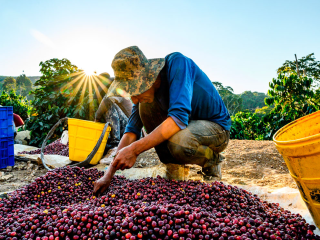
What kind of coffee beans is Kaddura? Introduction to the flavor characteristics of Caturra coffee beans made by hand
For more information on coffee beans, please follow the coffee workshop (Wechat official account cafe_style) Coffee belongs to the evergreen shrub of the genus Rubiaceae. There are about 125 species of plants under the genus Coffea, distributed in the subgenus Coffeae (25 in Africa and 55 in Madagascar).

Katim Coffee Flavor description Variety planting Development History Story introduction to Variety allusions in producing areas
For the exchange of professional baristas, please follow the coffee workshop (Wechat official account cafe_style) Catimor (Catimor): an important variety of commercial beans at present. East Timor was colonized by Portugal for 400 years, and the Portuguese had long been in contact with East Timorese coffee trees. In 1959, the Portuguese moved the Brazilian bourbon mutant Kadura to the east.